Phoenix to Grand Canyon Day Trip
Can you day-trip the Grand Canyon from Phoenix? Yes — but you'll drive 7–8 hours for 4–6 hours at the rim. Real drive times, 2026 fees, tour prices, and the closer alternatives.
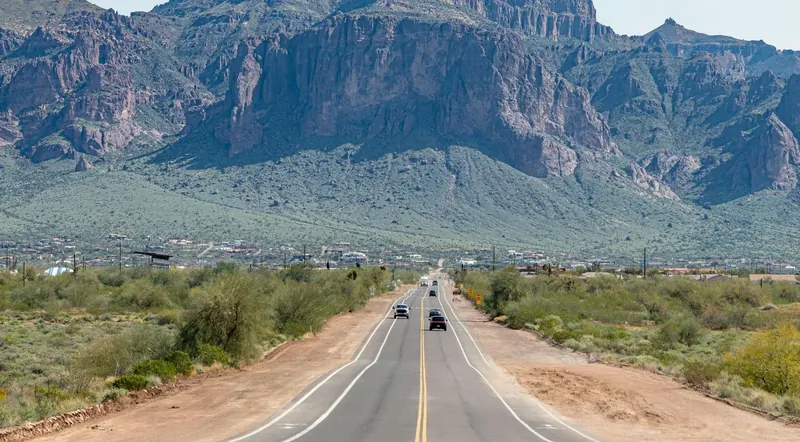
You can drive from Phoenix to the Grand Canyon’s South Rim and back in a single day. Roughly 230 miles each way, three and a half to four hours in the car, done twice. That is the part every tour page and travel blog tells you. Here is the part they bury: you will spend more than twice as long in the car as you will at the rim. Seven to eight hours of driving buys about four to six hours of canyon, and a guided bus tour buys you even less — typically three.
It is genuinely doable. Plenty of people do it and come home glad they did. But it is a thirteen-hour day, and the honest answer to “should I?” depends entirely on whether you can spare one night. If you can, the trip transforms: sunrise, sunset, a real walk below the rim, and a hotel instead of an interstate at nine in the evening.
This guide gives you the real numbers — drive times by suburb, the 2026 fee schedule including the new non-resident surcharge, what a guided tour actually delivers, what you can realistically see in the hours you have, and the closer Arizona alternatives if eight hours behind the wheel kills the idea. We run tours on the Apache Trail, forty-five minutes the other direction, so read the last section with that in mind; everything before it is just the arithmetic.
The Honest Drive-Time Reckoning
The South Rim of Grand Canyon National Park sits about 230 miles from Phoenix — roughly 3.5 to 4 hours each way in normal conditions. The standard route is Interstate 17 north out of the Valley, climbing from Phoenix’s ~1,100 ft elevation to Flagstaff at ~7,000 ft, then either US-180 northwest through the San Francisco Peaks or continuing to Williams and taking SR-64 north to the park’s south entrance at Tusayan.
The two routes are close in distance. US-180 is slightly more direct from Flagstaff; the I-40 to Williams to SR-64 route is wider, faster highway and the better choice in winter weather.
| From | Distance to the South Rim | Driving time (no stops) |
|---|---|---|
| Downtown Phoenix | ~230 mi | 3.5–4 hrs |
| Phoenix Sky Harbor Airport | ~225 mi | 3.5–4 hrs |
| Old Town Scottsdale | ~225 mi | 3.5–4 hrs |
| Tempe | ~225 mi | 3.5–4 hrs |
| Mesa | ~220 mi | 3.5–4 hrs |
| Apache Junction | ~215 mi | 3.5–4 hrs |
Scottsdale, Tempe, Mesa and Apache Junction all sit on the northeast and east side of the metro, so their numbers land within fifteen or twenty minutes of downtown Phoenix’s. Sources vary between about 224 and 232 miles depending on exactly where you start and finish; all of them mean “about 230 miles, about four hours.”
Pad those numbers. Weekend and Sunday-afternoon return traffic on I-17 can add 15–45 minutes. Winter storms around Flagstaff slow or close I-17 and SR-64 outright. In summer the south entrance station backs up 30 minutes or more at midday. A realistic planning figure is 8+ hours of driving and queuing for the round trip. Check ADOT at az511.gov before you leave.
What the day actually looks like, self-driving, in summer:
- 6:00 a.m. — Depart central Phoenix.
- 7:15 a.m. — Quick stop near Camp Verde in the Verde Valley for fuel and coffee.
- 9:45–10:00 a.m. — Arrive at the south entrance, pay, park at the Visitor Center.
- 10:00 a.m.–3:30 p.m. — About five and a half hours at the rim: viewpoints, the Rim Trail, a short walk below the rim, lunch.
- 3:30 p.m. — Depart.
- 7:00–7:30 p.m. — Home in Phoenix.
Thirteen-plus hours for five at the canyon. That is the honest shape of it.
The verdict: if one day is all you have, self-drive, leave by 6 a.m., and accept a rushed but real visit. If you can spare a single night in Tusayan, Williams or Flagstaff, do that instead.
Which Rim, and Why
- South Rim — the answer for Phoenix day-trippers. About 230 miles, 3.5–4 hours. Open year-round, the most viewpoints, all the famous lodges and trails, and a full free shuttle system.
- North Rim — not a day trip. About 351 miles and 5.5 to 7 hours from Phoenix, higher (~8,000 ft), cooler, and normally open only mid-May to mid-October. 2026 is not a normal year. The Dragon Bravo Fire, ignited by lightning on 4 July 2025 and fully contained on 28 September 2025 after burning roughly 145,000 acres, destroyed the historic 1937 Grand Canyon Lodge, the North Rim Visitor Center and dozens of other structures. Per the National Park Service the North Rim reopened for the 2026 season on 15 May 2026, but with no overnight lodging, no fuel, no potable water and no food service inside the park for the entire season — visitors must be completely self-sufficient — and the North Kaibab Trail has remained closed for post-fire repairs. Kaibab Lodge, the North Rim Country Store and Jacob Lake Inn offer services outside the park. Confirm current status with the NPS before planning anything around it.
- West Rim / Grand Canyon West, with the Skywalk. About 250–265 miles, 4 to 4.5 hours from Phoenix. This is not the national park. It sits on Hualapai tribal land with its own admission: the All-Access Pass is $99 per person including the Skywalk, shuttle and cultural sites; General Admission is $67 without the Skywalk. No NPS pass applies and no foreign-visitor surcharge applies either. It is closer to Las Vegas than to Phoenix, and for a Phoenix visitor the South Rim is both better and cheaper.
For a Phoenix day trip, choose the South Rim. There is no serious argument for anything else.
Entrance Fees, Passes and the 2026 Surcharge
Fees change; verify on nps.gov/grca before you go. As of this writing:
- Standard entrance, U.S. residents: $35 per private vehicle, $30 per motorcycle, $20 per person on foot or bicycle. Each is valid 7 consecutive days and covers both rims.
- The park is cashless. All three entrance stations take credit, debit and mobile pay only.
- America the Beautiful annual pass: $80, covering entrance at all federal recreation sites for the holder and their vehicle passengers.
- Non-U.S.-resident surcharge, effective 1 January 2026: $100 per person, age 16 and over, on top of the standard fee, at the Grand Canyon and ten other high-traffic parks — Yellowstone, Yosemite, Zion, Glacier, Grand Teton, Rocky Mountain, Acadia, Bryce Canyon, Sequoia & Kings Canyon and Everglades. It stems from Executive Order 14314, signed 3 July 2025; the Congressional Research Service (report IF13098) states that “the nonresident entrance fee for the 11 parks is an additional $100 per person on top of those parks’ standard entrance fees.” Children 15 and under are exempt. U.S. permanent residents are exempt with proof of residency.
- The surcharge also applies on commercial tours. The Town of Tusayan’s official guidance is explicit: “The $100 non-resident fee applies to every non–U.S. resident visitor aged 16 and older on commercial road-based tours, in addition to the standard commercial tour vehicle fee.” Booking a bus does not avoid it.
- The non-resident America the Beautiful pass costs $250 and waives the surcharge. Break-even is roughly three or more people travelling together, or anyone visiting more than one of the eleven parks. Passes bought in 2025 remain valid for their full twelve months and are unaffected.
- Free entrance days in 2026 (fee waived for U.S. residents only): reported dates include 16 February, 25 May, 14 June, 3–5 July, 25 August, 17 September, 27 October and 11 November. Under the 2025 policy changes Martin Luther King Jr. Day and Juneteenth were removed from the calendar. Free days are among the most-changed details on the whole NPS site — confirm the current list before relying on one.
- Reservations and timed entry: none required. This is the single most common point of confusion. Unlike Arches, Rocky Mountain and several others, the Grand Canyon has no timed-entry or advance-reservation system for day visitors. Arrive and pay, or show your pass. Buying ahead at recreation.gov or at the Tusayan IMAX saves time at the gate — note that the Visitor Center near Mather Point does not sell passes.
Other Experiences You Might Enjoy
Everything above is four hours north. If your Arizona list is longer than one canyon, the country between Phoenix and the rim is full of things worth a stop — Sedona and Oak Creek Canyon at the halfway mark, Montezuma Castle at Camp Verde, the San Francisco Peaks above Flagstaff — and east of Phoenix the Superstition Mountains, Canyon Lake, Goldfield Ghost Town and the Apache Trail sit less than an hour from your hotel. A few ways to get out into all of it:
Getting There Without Driving Yourself
There is no quick, cheap, car-free same-day option from Phoenix. The good car-free options are all overnight trips.
- Grand Canyon Railway, from Williams. The classic no-car route, but it starts in Williams — 2.75 to 3 hours’ drive north of Phoenix — so it is not a same-day Phoenix round trip on its own. The train leaves Williams at 9:30 a.m. (8:30 a.m. in November and December), reaches the South Rim around 11:45 a.m., departs the canyon at 3:30 p.m. and returns to Williams at 5:45 p.m.: 65 miles and about 2h15m each way, for just over three hours at the rim. 2026 round-trip fares from thetrain.com run $89.98 adult / $57.98 child in Coach; $172.98 / $132.98 First Class; $202.98 / $192.98 Observation Dome (no children under 2); Luxury Dome and Luxury Parlour $242.98, adults only. A $66 coach promotion (code ROUTE66, with blackout dates) runs through 2026 for the Route 66 centennial. To use the train sensibly, overnight in Williams.
- Amtrak. The Southwest Chief stops in Flagstaff, and you still need a shuttle or car north to the rim. Not a same-day Phoenix option.
- Groome Transportation, formerly Arizona Shuttle. Scheduled shared vans from Phoenix Sky Harbor to Flagstaff in about 2.25–2.75 hours, with connecting service Flagstaff to the Grand Canyon. Stitching the segments together is a multi-hour, multi-leg journey — fine for an overnight, impractical for a day trip.
- Flixbus and Greyhound. Flixbus runs Phoenix (Sky Harbor 44th St) to Flagstaff; getting to the rim needs another connection. Rome2Rio puts the full car-free trip at about 6h15m each way.
- Flights. Commercial Phoenix–Flagstaff flights take about an hour and still leave you a drive. Neither cheap nor fast enough to matter.
- Helicopter and airplane tours from Phoenix or Scottsdale. Several operators sell air tours, and they are genuinely the only way to see the Grand Canyon and be back for dinner without an all-day slog. They are expensive, and you see the canyon from the air rather than from the rim — a different experience, not a substitute.
Guided Day Tours from Phoenix and Scottsdale
The going rate for a guided Grand Canyon day tour out of the Phoenix metro is roughly $200–230 per adult, usually including hotel pickup, the entrance fee and a Sedona stop. Expect 11 to 15 hours door to door and about three hours actually in the park.
| Operator | Duration | Price (adult) | Notes |
|---|---|---|---|
| Detours American West | Full day, depart ~8:45a / return ~5:00p | Small group, includes Sedona | 25-year local operator; ~3 hrs at the rim; helicopter upgrade available |
| 360 Adventures | ~12 hrs | $219 adult / $130 child, taxes and fees included | Small group; Sedona and Oak Creek stops; ~3 hrs in the park |
| Southwest Tours | ~14 hrs, private | $880 flat for 1–4 people, +$165 per extra person; +$45 fuel surcharge from 1 March 2026 | Private guide, up to 10 people; departs 6:30–7:45 a.m. |
We do not sell any of these and earn nothing from naming them — they are here so the market makes sense. All three now flag the $100 non-resident surcharge for international guests. Cancellation windows range from 24 hours (Southwest Tours) to 72 hours (360 Adventures, Detours).
A tour removes the driving and adds narration, and for travellers who don’t want to drive 460 miles in a day that is worth real money. The trade is that you are on their clock and you get the least rim time of any option on this page.
What You Can Actually See in Four to Six Hours
A realistic priority order for a day-tripper:
- Mather Point and the Grand Canyon Visitor Center. Park here — lots A through D — and Mather Point is a few steps away. It is most people’s first view, and it is the one that stops conversation.
- The Rim Trail to Yavapai Geology Museum and Yavapai Point. About 0.7 miles on a flat, paved, wheelchair-accessible path. The museum’s picture windows and geology exhibits orient you faster than anything else in the park. The paved, mostly flat 1.3-mile Trail of Time continues to Verkamp’s in the Village.
- Grand Canyon Village Historic District. El Tovar, Hopi House, Lookout Studio, Kolb Studio and Bright Angel Lodge — all walkable, all right on the rim.
- A short walk below the rim on the Bright Angel Trail, to the first tunnel or, if you are fit and it is not midday in summer, the 1.5-Mile Resthouse. This is what turns a viewpoint into a canyon.
- Desert View Drive and the Watchtower, only if you have the full five or six hours and your own car. The 1932 Watchtower is 23–26 miles and about 45 minutes east of the village. It is spectacular and it will eat everything you have left. Most day-trippers skip it, or use it as an exit route east — the viewpoint turnoffs are easier heading west, back toward the village.
The free shuttle system is included with entry and is how most of the park moves:
- Village (Blue) Route — year-round, connecting the Visitor Center, lodges, campgrounds and Market Plaza on a roughly 50-minute loop.
- Kaibab Rim (Orange) Route — year-round, from the Visitor Center to Yavapai Geology Museum, the South Kaibab Trailhead and Yaki Point. Yaki Point Road is closed to private cars year-round, so the shuttle is the only way there.
- Hermits Rest (Red) Route — the 7-mile scenic Hermit Road. Hermit Road is closed to private vehicles from 1 March to 30 November, so in those months the Red shuttle is the only way to see it. December through February you can drive it yourself.
- Tusayan (Purple) Route — seasonal, 23 May to 11 September 2026, linking the gateway town of Tusayan to the Visitor Center.
In spring (1 March to 22 May 2026) the Village, Kaibab, Hermits Rest and early-morning Hikers’ Express routes all run, with the Village route roughly every 9 to 15 minutes from about 7 a.m. to 9 p.m. In winter, December through February, only the Village and Kaibab routes operate.
Parking: the Visitor Center lots are the biggest and your best bet. In peak season arrive before about 10 a.m., because the lots fill by late morning.
Hiking: Honest Guidance for Day Visitors
Two corridor trails drop below the South Rim, and the NPS mantra applies to both: “down is optional, up is mandatory.” The climb back takes roughly twice as long as the descent, in thinner air and usually in more heat.
Bright Angel Trail — seasonal water, restrooms, emergency phones. NPS day-hike turnarounds:
| Turnaround | Round trip | Time | Elevation change |
|---|---|---|---|
| First / Second Tunnel | 0.1–1.8 mi | Under an hour | Minimal |
| Mile-and-a-Half Resthouse | 3 mi | 2–4 hrs | ~1,120 ft |
| Three-Mile Resthouse | 6 mi | 4–6 hrs | ~2,120 ft |
| Havasupai Gardens (formerly Indian Garden) | 9 mi | 6–9 hrs | ~3,040 ft |
Check with a ranger before attempting Havasupai Gardens as a day hike.
South Kaibab Trail — no water, no shade, steeper, bigger views, reached by the Orange shuttle only. Turnarounds: Ooh Aah Point at about 1.8 miles round trip, Cedar Ridge at about 3 miles, Skeleton Point at about 6 miles.
The safety guidance is not decorative. Do not attempt to hike from the rim to the Colorado River and back in one day; people die doing exactly that. In summer, avoid hiking below the rim between 10 a.m. and 4 p.m., when inner-canyon temperatures pass 100°F and can top 120°F. Carry roughly half a litre to a litre of water per hour of hiking, more on a hot ascent, and carry electrolytes with it.
Chad Hunter, the Grand Canyon’s branch chief of emergency services, reports that the park’s search-and-rescue team “responded to 302 incidents and assisted 455 hikers in 2023.” Park spokeswoman Joëlle Baird notes that “the Grand Canyon recorded an average of 17 deaths per year from 2014 to 2023,” with cardiac arrest the most common cause.
If you are not a hiker, none of this excludes you. The paved Rim Trail and the free shuttles deliver world-class views with essentially no elevation change, and large stretches are wheelchair accessible.
Mule rides book months ahead and do not fit a Phoenix day trip. Guided outfitters run inner-canyon day hikes, but a day-tripper from Phoenix realistically has time for a short rim-adjacent walk and nothing more.
Rafting and “Boat Tours” — Clearing Up the Confusion
If you searched for a Grand Canyon boat tour, here is the honest position: none of these is a Phoenix day trip.
- Colorado River whitewater, multi-day. The classic 3-to-18-day trips through the national park launch from Lees Ferry, are run by about sixteen licensed outfitters, and book a year or more ahead.
- Hualapai River Runners one-day whitewater. The only one-day whitewater trip in the Grand Canyon, on Hualapai land, launching from Peach Springs — itself 3.5+ hours from Phoenix. About six hours door to door from Peach Springs, meeting at 7:30 a.m. and returning between 5 and 7 p.m., with a helicopter lift out, from about $399 per person. Not a Phoenix day trip.
- Glen Canyon smooth-water float, from Page. A half-day float from the dam down to Lees Ferry: scenic, calm, and 4.5+ hours’ drive away.
- Black Canyon, Lake Powell and Antelope Canyon boat tours. All well outside Phoenix day-trip range.
The closest thing to a boat tour you can do from Phoenix as a genuine half-day is the Canyon Lake steamboat on the Apache Trail — 50 minutes from the city, and covered in our Canyon Lake visitor guide, including the 2026 closure that affects it.
Best Time to Go
The most-searched question about the canyon, and the short answer is the shoulder seasons: roughly April–May and September–October. They balance mild rim weather, safer inner-canyon hiking and thinner crowds than the summer peak.
The thing Phoenix visitors consistently underestimate: the South Rim sits at about 7,000 feet and gets real snow, averaging roughly five feet across a winter. It can be 105°F in Phoenix and 75°F at the rim — or snowing there in a spring storm. Pack layers whatever the month.
| Season | Rim weather | What it means |
|---|---|---|
| Winter (Dec–Feb) | Highs in the 40s°F, snow, icy trails | Fewest crowds and lowest lodge rates, snow-dusted canyon. Bring traction devices. The rim averages about 41°F in January; Phantom Ranch in the inner canyon sits near 56°F. |
| Spring (Mar–May) | 50s–70s°F, wildflowers, late snow possible | Excellent hiking. Spring break is busy. Snow has been recorded on the rim as late as mid-June. |
| Summer (Jun–Aug) | Rim highs in the 80s°F; inner canyon 100–120°F | Busiest and hottest. Afternoon monsoon thunderstorms and lightning on the rim from July to September; genuinely dangerous heat below the rim. |
| Fall (Sep–Oct) | 60s–75°F, clear air | Many people’s top pick: comfortable, clearer air, and crowds thinning after Labor Day. |
Crowds. Per NPS data reported by KNAU and Statista, the Grand Canyon recorded 4,919,163 recreation visits in 2024 — about 13,460 a day, roughly 200,000 more than 2023, and a third straight year as the country’s third most-visited national park behind Great Smoky Mountains (~12.19M) and Zion (~4.94M). Visitation concentrates heavily in June through August; January and February are quietest.
Monsoon season, July through September, brings afternoon lightning. Get off exposed viewpoints when storms build.
Sunrise and sunset. Mather, Yavapai and Hopi Point are the classic sunset spots and Yaki Point the classic sunrise one. Hopi Point, on Hermit Road, is reached by the Red shuttle for most of the year.
Our month-by-month guide to visiting Arizona and the Grand Canyon goes through all twelve months for the rim, the high country and the low desert together — including the fact that Phoenix’s best season is the rim’s coldest.
Where to Stay If You Overnight Instead
In-park South Rim lodges. Xanterra runs El Tovar, Bright Angel, Kachina and Thunderbird; reservations open 13 months ahead on the first of the month at grandcanyonlodges.com, and summer dates sell out within hours.
- El Tovar — the historic 1905 flagship, roughly $250–500+ a night in 2026. Portions are closed 25 June to 1 September 2026 for a guest-room refresh.
- Bright Angel Lodge — rim cabins and lodge rooms across a broad range, about $120–280; some rooms have shared baths.
- Kachina and Thunderbird — rim-side and mid-range, about $200–280.
- Maswik and Yavapai — more affordable and set back from the rim, about $185–230, run by Delaware North at visitgrandcanyon.com.
Gateway towns. Tusayan is 7 miles and about 10 minutes from the rim, the most convenient off-park base. Williams is about an hour away, a Route 66 town and home of the railway. Flagstaff is about 1.5 hours, with the widest range of dining and lodging.
Camping. Mather Campground on the South Rim is reservable up to six months ahead through recreation.gov; Trailer Village has RV hookups; Desert View Campground at the east end is seasonal. Reserve early for summer.
What It Actually Costs
Ballpark 2026 totals for two adults:
| Option | Total | What’s in it |
|---|---|---|
| Self-drive day trip | ~$100–160 | About $50–90 of fuel for the 460-mile round trip, plus the $35 vehicle entry and food. Cheapest by a wide margin. |
| Guided bus day tour | ~$400–460 | $200–230 per adult, usually including entry and a Sedona stop. No driving stress. |
| Overnight trip | ~$350–800+ | Lodging at $130–500 a night, plus fuel, entry and meals. A far better experience for the money. |
| Air or helicopter tour from Phoenix/Scottsdale | Hundreds each | Fast, aerial, home the same day. Premium price. |
Fuel maths assumes about 460 round-trip miles at current Arizona pump prices; adjust to the day. International visitors should add the $100 per person surcharge to every one of these lines except the air tours.
The Honest Alternatives, If Eight Hours of Driving Kills It
If the arithmetic above has cooled the idea, these are genuinely closer. None of them is the Grand Canyon, and we are not going to pretend otherwise — but several of them are better days out than a rushed canyon visit.
- The Apache Trail and Superstition Mountains — about 45 minutes from the east Valley. A winding scenic drive from Apache Junction past Lost Dutchman State Park, Canyon Lake and the old stagecoach stop of Tortilla Flat, through the eroded remains of a collapsed supervolcano. It is the closest dramatic canyon-and-desert country to Phoenix, and it is where guided 4x4 tours, cowboy cookouts and gold panning operate out of Goldfield Ghost Town. The unpaved section beyond Fish Creek Hill has had repeated closures and storm damage — check current road conditions before you drive it, and our self-drive guide covers which sections a rental car can legally handle.
- Canyon Lake — about 50 minutes. A blue reservoir ringed by 800-foot cliffs on the Apache Trail, with steamboat cruises. Note the 2026 closure and drawdown in our Canyon Lake guide.
- Sedona and Oak Creek Canyon — about 2 hours. Red-rock country, hikes from easy to spectacular, and a scenic canyon drive. The single best big-scenery day trip from Phoenix, and conveniently on the way to the canyon if you do go.
- Salt River Canyon — about 2.5–3 hours toward Globe and Show Low. A genuinely dramatic canyon, sometimes called a mini Grand Canyon.
- Tonto Natural Bridge State Park — about 1.5–2 hours near Payson: the world’s largest travertine bridge.
- Montezuma Castle National Monument — about 1.5 hours at Camp Verde: exceptionally well-preserved cliff dwellings and an easy short walk.
- Walnut Canyon National Monument — about 2.25 hours near Flagstaff: cliff dwellings in a forested limestone canyon, and a good add-on if you are heading north anyway.
Our best day trips from Phoenix and Scottsdale guide ranks all of these by drive time.
The guided Apache Trail day tours you can book through this site, all with hotel pickup from Phoenix, Scottsdale, Tempe or Mesa, with live figures checked 9 September 2026:
| Tour | Length | Price | Rating | What it covers |
|---|---|---|---|---|
| Apache Trail Histories and Mysteries Van Tour | 8 hrs | $169 | New, no reviews yet | Goldfield’s gold mine, the Superstition Mountain Museum, Weaver’s Needle, lunch at Tortilla Flat |
| Apache Trail w/ Dolly Steamboat Day Tour | 8 hrs | $183 | 4.9/5 (17) | The Canyon Lake steamboat cruise and the scenic corridor |
| From Scottsdale/Phoenix: Apache Trail Day Tour | 7 hrs | $200 | New, no reviews yet | 80 minutes at Goldfield, the steamboat cruise (paused to Jan 2027), Lost Dutchman Museum; lunch extra |
| Apache Trail Tour & Canyon Lake Cruise | 9 hrs | $215 | 4.9/5 (27) | The longest version — Superstition Mountains, a Saguaro Lake cruise (ticket bought separately), Goldfield admissions |
The Dolly Steamboat suspends cruises from 30 August 2026 until about January 2027 while Canyon Lake is drawn down, so the three steamboat tours above run a modified itinerary in that window — confirm what is included on the day you book.
Frequently Asked Questions
Can you do the Grand Canyon as a day trip from Phoenix? Yes. About 230 miles and 3.5–4 hours each way to the South Rim, giving you four to six hours at the rim if you self-drive and leave by 6 a.m., or about three hours on a guided bus tour. It is a 13-hour day.
Do I need a reservation or timed entry? No. The Grand Canyon has no timed-entry or advance-reservation system for day visitors. Buying your entrance pass online beforehand only saves queueing time.
How much is entry? $35 per private vehicle for seven days, or $80 for the America the Beautiful annual pass. Non-U.S. residents aged 16 and over pay an additional $100 per person as of 1 January 2026, including passengers on commercial tours; the $250 non-resident annual pass waives it.
Which rim should I go to from Phoenix? The South Rim, without qualification. The North Rim is 5.5–7 hours away and running on limited services after the 2025 Dragon Bravo Fire, and Grand Canyon West with the Skywalk is not the national park.
Is a guided tour worth it? If you don’t want to drive 460 miles in a day, yes — you get narration, no driving stress and usually a Sedona stop for around $200–230. The trade is that you get the least time at the rim of any option, typically about three hours.
Can I take a train or bus from Phoenix? Not as a day trip. The Grand Canyon Railway is excellent but departs from Williams, three hours north of Phoenix. Every car-free route needs at least one overnight.
When is the best time to go? April–May or September–October. Avoid the July–August combination of peak crowds and dangerous inner-canyon heat, and expect snow and ice on the rim in winter.
Can I hike into the canyon on a day trip? A short one, yes — the first tunnel on Bright Angel, or Ooh Aah Point on South Kaibab. Do not attempt the river and back in one day, and do not go below the rim between 10 a.m. and 4 p.m. in summer.
What’s closer if I don’t want to drive all day? The Apache Trail and Superstition Mountains at about 45 minutes, Canyon Lake at 50, Sedona at two hours, or the Salt River Canyon at two and a half.
Bottom Line
If one day is genuinely all you have, self-drive. Leave central Phoenix by 6 a.m., go straight to the South Rim Visitor Center, and give yourself a hard 3:30 p.m. turnaround. Prioritise Mather Point, then Yavapai, then the Village, then a short walk down Bright Angel. Skip Desert View unless you are ahead of schedule.
If you can spare even one night, spend it in Tusayan, Williams or Flagstaff. That single decision converts a thirteen-hour windshield day into sunrise, sunset and a real hike, and it is the recommendation we would give a friend without hesitating.
If you don’t want to drive at all, book a guided day tour at $200–230 an adult and accept about three hours at the rim — or take the railway from Williams as part of an overnight. Buy your pass ahead, know the park is cashless, and if you are visiting from outside the U.S., budget the $100-per-person surcharge or the $250 non-resident annual pass if there are three or more of you.
And if eight hours of driving has killed the idea entirely, the Superstitions are forty-five minutes away. Compare all the Apache Trail tours, or start with the featured Apache Trail day tour if a full guided day with a lake cruise is what you were really after. While Canyon Lake is closed, its cruise runs on Saguaro Lake.
The Superstitions, Goldfield and a Lake Cruise in One Day
Hotel pickup, a local guide and a group of five or fewer, with Goldfield Ghost Town and a 90-minute cruise on Saguaro Lake. The cruise ticket, about $34, is bought separately after booking, and at least two adults must book. Free cancellation up to 24 hours before.
Check Availability & Book